


CHAPTER 9 — The Sequel Setup The Platforms Need the Mutation
Facebook and MySpace begin as polite networks — birthdays, photos, friends, college dorms, early nostalgia. But polite content doesn’t scale. It doesn’t retain. It doesn’t hook. It doesn’t generate the engagement metrics platforms need to dominate. Meanwhile, on the edges of the internet, 4chan is generating engagement Facebook cannot match. Not because of ideology — but because of mechanics. Anonymous virality. Unfiltered tone. Mutation logic. Facebook watches this from a di


CHAPTER 5 — Fox Copies Limbaugh
Industrializing the Tone.... Limbaugh discovers the profitable tone. Fox mass‑produces it. This is the moment when a single broadcaster’s method becomes a 24‑hour cable architecture — scaled, serialized, and engineered for maximum engagement. Fox doesn’t copy Limbaugh’s ideology. Fox copies his mechanics. Because the mechanics are what make money. The Discovery: Tone Can Be Scaled Fox executives study Limbaugh the way a tech company studies a breakthrough algorithm. They see:


Ever Since Limbaugh___Chapter 1
CHAPTER 1 — The Business Model Awakens Deregulation → Murdoch → CNN as Coke → Fox enters needing Pepsi to crush Ever since Limbaugh, the media landscape was already shifting. But before Limbaugh’s tone could reshape the culture, something else had to happen: the business model had to awaken. The moment deregulation hits Deregulation removes the old civic obligations from broadcast news. The Fairness Doctrine is gone. Ownership caps loosen. Public‑service norms evaporate. News

Soviet and Contemporary Russian Information Tactics – Academic OutlineI. Comparison of USSR "active measures" and propaganda with contemporary Russian I/O OPs
by #JROspace ref APX Zz (The Sound of Silence) Soviet and Contemporary Russian Information Tactics – Academic Outline I. Introduction Research focus: Comparison of USSR "active measures" and propaganda with contemporary Russian oligarchic information operations and media control.¹ Key terms: propaganda, disinformation, aktivnye meropriyatiya (active measures), information warfare, oligarchic media capture.² II. Soviet Union: Propaganda, Disinformation, and Active Measures A.
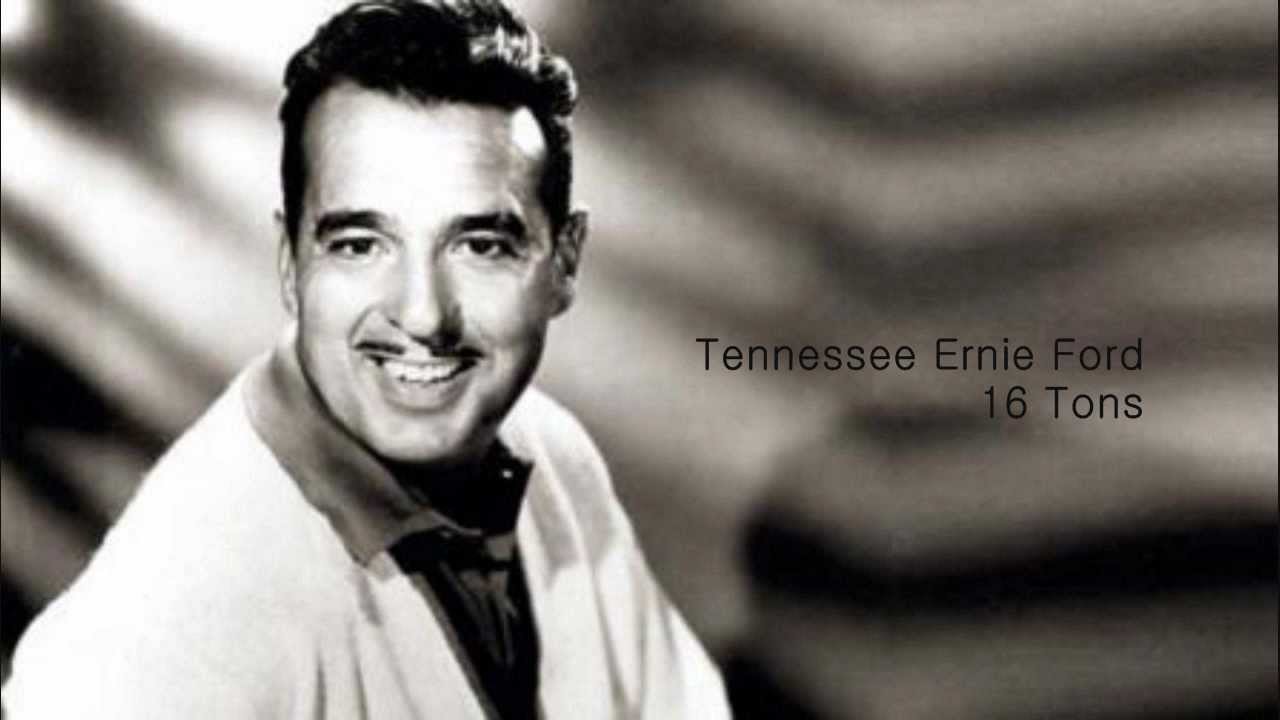
“Sixteen Tons” and the AtoE Test: Noise, Signal, and the Common Man’s Burden in an Age of Interference
By Professor Space4#brain#4, Liberal Arts, U. of Who? Midnight Oil once demanded that we “say fair’s fair,” and in JROspace’s latest montage that old refrain becomes something stranger, sharper — a kind of scholarly siren calling us to examine authority, accountability, and the static that distorts both. The video’s musical braid — Greensleeves, Sixteen Tons, America the Beautiful, and fragments of sacred hymnody — forms a sonic palimpsest where ideals shimmer, fracture, and


Appendix Z — Table of Contents (TOC) JROspace update 1830 05JUL2026
SITREP – Appendix Z TOC DTG: 051828CJUL26 REF: Appendix Z (Sections 1–3) SUBJ: Table of Contents – Identity‑Obligation Dynamics Case Studies Z‑0.0 — Appendix Overview High‑level framing of identity–obligation dynamics across political, media, and civic ecosystems; doctrinal linkage to A>E collapse signatures. Z‑1.0 — Case Study: White Nationalist Masked March During the U.S. 250th Anniversary Z‑1.1 — Event Summary Z‑1.2 — Doctrinal Relevance Z‑1.3 — Heritage‑Based Autho

JROspace MASTER MEMO_1.0 — APPENDIX restructure and SITREP
Executive Overview This memo presents a unified doctrinal analysis of identity, obligation, and selective governance across political, cultural, and administrative systems. It integrates Gingrich’s recent Fox News “commie” narrative equivalence maneuver, Soviet favoritism, U.S. selective governance, Christian nationalist accountability gaps, and the JROspace A→E doctrinal module. All sections are cross‑referenced to Appendices A–H, F, K, and X. Gingrich’s Narrative Equivalenc


“Gracious Nuts: How Dorcas Wangari Macharia Turned Faith, Hardship, and Nutrition Into Industrial Empowerment”
Editor’s Note This exclusive feature expands on two pieces currently circulating across the JROspace network. “THE FOUNDATION of Learning: Childhood Nutrition,” which argues that nutrition is the structural prerequisite for learning, stability, and long‑term empowerment. The second is the recent Faith & Work with Carole Evans interview featuring Dorcas Wangari Macharia (YouTube: “From Survival to Surrender”), where she shares her journey through hardship, surrender, and calli

Authority Without Accountability in Secular Political Communication: An Information Operations Analysis of Donald Trump’s July 2026 CNBC Interview
by JROspace Abstract This paper applies the accountability‑chain framework developed in Ideology Without Accountability: An Information Operations Assessment of Christian Nationalism to former President Donald Trump’s July 2026 CNBC interview. The original JROspace study documented how Christian nationalist rhetoric claims Christian authority while rejecting Christian moral accountability, producing predictable narrative collapse when accountability is applied. Using the same


Truth vs. Reality: Manufactured Abuse Narratives in U.S. Politics
by John Rozean, 1 July 2026 Abstract This paper examines the recurring political claim that certain constitutional or electoral processes are being “abused,” despite empirical evidence showing extremely low rates of verified misconduct. Previous analyses of illegal voting demonstrate that the probability of unlawful ballots being cast is statistically negligible (Brennan Center for Justice; Minnite; Heritage Foundation). This paper extends that probability framework to a new